Is Intelligence Bigger than Computation?
Luke Hutchison challenges the widespread assumption that intelligence is computable, questioning why Marvin Minsky’s 1970 prediction of human-level AI within a decade remains unfulfilled over half a century later. Drawing on the Church-Turing thesis and Gödel’s incompleteness theorem, he argues that consciousness, understanding, and free will may originate outside our three-dimensional space-time—possibly in a seven-dimensional physics suggested by mathematical cross-product theory. Hutchison proposes that the brain functions as a “quantum radio” to the soul, and contends that while AI is extraordinarily useful, it lacks genuine feeling and understanding—the very qualities that define true intelligence.
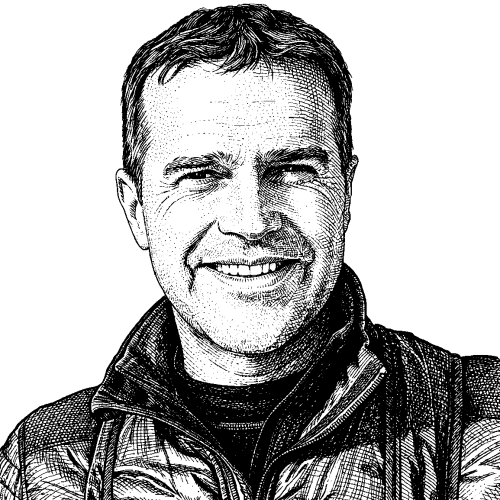
Luke Hutchison is a New Zealand-born computer scientist and researcher whose work explores the fundamental limits of computation, the architecture of biological systems, and the future of artificial intelligence. Known for his deep interest in the theoretical foundations of intelligence, Hutchison has spent his career at the intersection of high-performance computing and the quest to understand the nature of mind.
Luke Hutchison
Start with a question that was asked by a famous luminary in cognitive science. In from three to eight years, we will have a machine with the general intelligence of an average human being. So take a guess at who said this and when. It’s a name a lot of you will recognize. Was Marvin Minsky in 1970, 54 years ago, more than half a century ago? Why are we still saying this today after 54 years? of not achieving this. And more importantly, what was the flawed assumption? Is it that intelligence is simple, that intelligence requires only following the rules of logic? Or is it that intelligence is computable? Maybe intelligence is not even computable, and that’s what we’re going to talk about today.
So what is computation? This slide, this one thing, is the very heart of computer science. This is everything in computer science. Everything emerges from this. So we have a set of nested uh rings in this Venn diagram. Uh at the core, we have a set of problems called regular grammars, and the set of machines that can recognize those are are Basically, regular expressions, finite automata. The next larger ring is a more powerful set of Machines that can do a more powerful more they can solve tasks that require more computational power. Then we have linear bounded automata, which can solve even more difficult problems. And in the outer ring, we have the Turing machine.
The Turing machine is the fundamental model of computation. Everything from your smartwatch to the microprocessor that runs your microwave, to the largest supercomputer in the world is an example of a Turing machine. All computation is equivalent. At the largest, in the most powerful form of computation, all computation is equivalent. All computers are equivalent. They may have different limits of memory and they may run at different speeds, but It’s all fundamentally exactly equivalent.
Now, is there anything larger than that? So there’s something called hypercomputing. It’s a highly, it’s a hypothesized thing that probably doesn’t actually exist, and I’ll talk about that in a second. But there are things that we know are uncomputable. We can prove that certain problems cannot be solved by computers. The most famous is the halting problem. You basically, you can’t write a program that looks at another program and tells you if that program will ever halt or if it will stay running forever. It’s impossible because you can achieve a contradiction very easily. And when you have a mathematical contradiction, the premise has to be false. So there are things that we know are uncomputable.
But where is intelligence in this Venn diagram? Is it in the Turing machine ring or is it outside the Turing machine ring? We don’t know. Like, nobody can answer this question. And nobody in the whole world I claim can answer this question. So, this is really at the core of AI. Where is intelligence? Is it computable or is it uncomputable? We don’t know.
And actually, you know, I say here, if does u equal t. You know, if u equals t, that means that everything that’s in u that’s not in t, there’s nothing in there, which means there’s nothing that’s uncomputable that we can solve in this universe. Which means the halting problem, you literally cannot build a machine that will solve the halting problem. Potentially, you cannot build a machine that will solve intelligence if it falls outside of T.
So, probably hypercomputing is impossible. There’s no type negative 1 Chomsky hierarchy. So, basically, type 3 was at the core, then type 2, type 1, type 0 was the Turing machine. There’s nothing larger than the Turing machine. And there’s a reason why the Turing machine was given designation zero, because we don’t think we can create anything bigger.
There’s something called the Church Turing thesis that basically equates physical matter and computation. So if something can be computed, you can build something physical that will compute it. And if something physical exists, you can. You can compute that with a computing model on some computing substrate. You can compute exactly what the physical system does. So it equates computation and matter. This is mind-blowing. And the Church Turing thesis really says if there are things that are uncomputable, they cannot exist in this universe. That’s even more mind-blowing. So this would mean that there is no more powerful form of computation in this universe than Turing computing, and that the entire universe is computable, which means the entire universe is deterministic.
So either, there’s one of three possibilities here with respect to intelligence. Either intelligence is computable and we can build intelligence with a computer. I think probably 90% of people in this room believe this. Number two, and I’ve crossed this one out because it already contradicts itself. Intelligence is uncomputable and we cannot ever build intelligence in this universe because the universe is limited to what is computable. And we just said intelligence is not computable. So it’s not possible by contradiction by the Church-Turing thesis. And the third option is: intelligence is uncomputable, but it originates outside this universe. And it originates from a bigger physics.
So the Church-Turing thesis strongly implies this is one of these sorts of mathematical theorems that basically no one can refute. It’s kind of like the second law of thermodynamics. Like no one’s ever going to disprove the second law of thermodynamics. It it’s impossible as far as we know. So Church Turing implies that u u equals t, which means the entire universe is completely computable and you cannot solve uncomputable problems in this universe with the matter we have or the laws of physics in this universe.
Statistical inference is not even true and complete, by the way. So this one slide, this diagram here, shows you everything you need to know about machine learning. Basically, everything, especially in we had some older forms of AI which was sort of symbolic. Now everything’s kind of basically this. We’re basically doing statistical regression. So you fit a manifold, which in one dimension, 1. 5 dimensions, is a line, basically. You fit a line or a surface to a cloud of points. And then you have an x value and input, and you read off the y value of the prediction, which is where it hits the manifold or the line. And that’s your prediction. Everything we do in particularly supervised learning is this form. Everything we do in deep learning is just this. It’s a chart. How can a chart be intelligence? Does that diagram have innate intelligence? I would argue it doesn’t. There’s no intelligence. It’s simply a mathematical function. And I believe intelligence is more than a mathematical function.
Now you can wrap this with a Turing machine. This is not even Turing complete. This is a very small subset of all the things that Turing machines Machines can do. But you can wrap this in a Turing machine, but you can’t get bigger than a Turing machine. So even if you wrap statistical inference with a Turing machine, you’re still limited in your computation.
But intelligence does exist in this universe, so where does it come from? The only thing we can definitively prove mathematically that is non-deterministic in this universe is the collapse of the quantum wave function. And there are probably other Quantum effects as well that are non-deterministic. Everything else is deterministic, which means it can be computed, it can be predicted, you can run it as a simulation. Probably intelligence, consciousness, and free will are all aspects of the same phenomenon. Therefore, intelligence, which is non-deterministic, assuming we have free will, which I believe we do, it probably emerges at the quantum level, because we can prove mathematically there’s really no other origin for non-determinism in this universe. And so maybe the brain is a quantum radio to our spirits. So this is where we introduce the concept of a soul because that’s something, a seat of our intelligence that exists outside of this universe.
So, and I want to get more clearly to the core of what intelligence is. So, intelligence is not just the application of logic, it also incorporates subjective experience. It’s not just I think, therefore, I am. which by the way, when I start I started this AI team at Google, it hired 30 engineers, and I named the team Descartes, because Descartes said I think therefore I am. But I’ve come to believe now in the ensuing years that far more importantly, it’s I feel therefore I am. This is what defines intelligence. It’s mind, but it’s also heart. And we do not talk about this stuff in AI.
So thinking requires understanding, and consciousness requires feeling. AI experiences neither of these things. AI feels the same way about driving down a lane on a road as it does crashing into a tree, which is that it feels nothing. And this is why I will never trust an autonomous vehicle to drive my family around because it doesn’t feel anything. I’d much rather trust a fallible human because it feels something.
So, and there’s no reason to believe that conscious awareness, subjective experience, understanding, or emotions are computable, or that they would become an emergent phenomenon given enough computation, which a lot of people believe. I just think that doesn’t follow.
So, what is missing from AI is feeling and understanding. Try defining each word without circular terminology. It’s impossible. How would you describe to someone that had never tasted salt what salt tastes like? It’s salty, right? It’s something you have to experience it.
DNC 9336 says, The glory of God is intelligence, or in other words, light and truth. And I posit that light is feeling and heart, and truth is understanding and mind. And there again, we have the two things that form. the foundation of consciousness.
So here’s my theory. As a precursor, Goethe’s incompleteness theorem, which we heard earlier from Wolff. And also, Tarski’s undefinability theorem, which is related to Gödel’s incompleteness theorem. They say that there exist mathematical facts in this universe that you simply cannot prove. They’re true, and you can’t prove them. And I wonder if intelligence is one of those things.
However, I want to give one theory as to the physics of intelligence that is both as crazy and as plausible as anything else that anyone else could suggest. Just to sort of illustrate that basically we have to think bigger, right? So here’s my theory.
The premise is intelligence and consciousness are uncomputable. The physics of our space-time, which give rise to computation, therefore can’t actually generate intelligence because then intelligence would have to be computable by the Church-Turing thesis. Therefore, intelligence has to exist outside of our 3D plus T space-time. And this correlates actually with DNC 131. 7. All spirit is matter, but it is of a more fine or pure nature. meaning our intelligence may exist outside this universe since it’s comprised of matter that is of a different type than the matter in this universe. And if that’s true, why would we be so audacious As to think that we can reconstruct intelligence from the building blocks of this universe alone. And here’s an interesting corollary: if you prove that intelligence is uncomputable, you have proved the existence of the soul. Which would be incredible. If anyone can do that, please tell me about tell me your proof.
And I think this is my last slide. No, I’ve got one more. So here is my core theory, and I’m out of time, but I’ll quickly go through this.
So the mathematical cross product can only exist in three and seven dimensions. Because of its connection to the quaternions and the octonions, which are an extension of the complex numbers to four and eight numerical dimensions. The cross product gives rise to all of physics because it gives rise to space and volume, it gives rise to rotation, it gives rise to changing of reference frames. And because three-dimensional space exists, I believe that not only can seven-dimensional space exist, but it must exist because of the relation to the rotation groups G2 for the Octonians. It’s a Lie group if anyone’s a mathematician in here. So adding dimensions expands our degrees of freedom, which means the laws of seven-dimensional physics would be much greater than the laws of three-dimensional physics. Other things might be possible. Maybe there’s no speed limit to light. You know, things could work in very different ways. And then quantum effects may be our bridge between three dimensions and seven dimensions.
So here are some open questions about seven-dimensional intelligence. Can intelligence only exist in seven dimensions because it is uncomputable of three? Is God seven-dimensional? And maybe that’s what it means by the words, let us go down, when the gods came down to create the earth. They came down from seven dimensions to three dimensions. We seven-dimensional intelligence is living out our lives as projections into three-dimensional bodies. And our quantum effects, the bridge between three and seven dimensions.
So that’s basically it. Again, I sort of throw this out there as just a way to, you know, we need to think bigger. I think intelligence is much greater than computation. We need to start coming up with theories like this as to what it might be and how it might work. And I’m not saying AI is not useful, it’s extremely useful, but it’s not intelligent. It’s not now, and it may never be. There’s my contrarian view. So.
Speaker 2
Thank you, Luke.